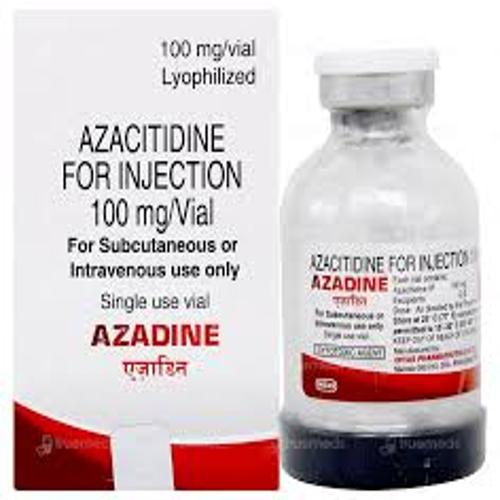
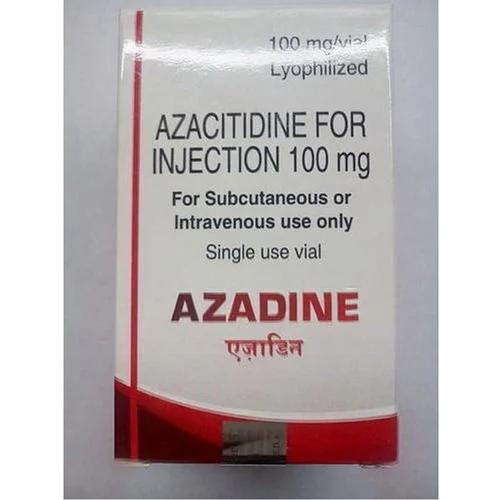
About 100mg Azadine Azacitidine Injection
| Strength |
100 mg |
| Brand |
Azadine |
| Packaging Type |
Box |
| Manufacturer |
Intas |
| Treatment |
Blood Cancer |
| Pack Size |
1ml |
| Composition |
Azactidine |
Azadine Injection is used in the treatment of some kinds of blood cancer. It is used for the treatment of adult patients with all subtypes of Myelodysplastic Syndrome (MDS). It may be also used to treat other conditions, as determined by the doctor.
Azadine Injection is given as an injection under the medical supervision of a doctor. Your doctor will decide what dose is necessary and how often you need to take it. This will depend on what you are being treated for and may change from time to time. You should take it exactly as your doctor has advised. Taking it in the wrong way or taking too much can cause very serious side effects. It may take several weeks or months for you to see or feel the benefits but do not stop taking it unless your doctor tells you to.
The most common side effects of this medicine include injection site reactions (pain, swelling, redness), vomiting, weakness, and nausea. If these bother you or appear serious, let your doctor know. There may be ways of reducing or preventing them. You must inform your doctor before taking any vaccination while on treatment with this medicine. Regular blood tests are required to check your blood cells along with the heart, liver, and kidney.
Before taking it, tell your doctor if you have liver, or kidney problems or are taking any medicines to treat infections. Many other medicines can affect, or be affected by, this medicine so let your doctor know all medications you are using. This medicine is not recommended during pregnancy or while breastfeeding.
Advanced Therapy for Myelodysplastic SyndromesAzadine 100mg Injection is an effective antineoplastic agent recommended for adults diagnosed with Myelodysplastic Syndromes (MDS) and certain types of leukemia. By inhibiting DNA methyltransferase, this treatment works to disrupt the growth of cancerous cells, providing a critical therapeutic option for individuals requiring advanced myelosuppressive therapy.
Strict Administration and Handling RequirementsThis medication is strictly for hospital use and should only be administered by healthcare professionals certified to manage cytotoxic agents. After reconstitution with sterile water, Azadine can be given through intravenous or subcutaneous injection, following precise dosage guidelines set by a physician. Adequate handling procedures are mandatory to ensure safety for both patients and caregivers.
Storage, Preparation, and Usage GuidelinesAzadine should be stored at temperatures below 25C, kept away from light, and never frozen. The lyophilized powder must be reconstituted just before use, ensuring potency and reducing contamination risk. Always follow your healthcare provider's specific instructions regarding dosing and administration frequency to achieve optimal results.
FAQ's of 100mg Azadine Azacitidine Injection:
Q: How should Azadine 100mg Injection be administered?
A: Azadine 100mg Injection must be given either intravenously or subcutaneously, and administration should always be performed by a qualified healthcare professional in a hospital setting as this is a cytotoxic drug.
Q: What is the process for preparing Azadine for injection?
A: To prepare Azadine, the vial's lyophilized powder should be reconstituted with 4 mL of sterile water for injection immediately prior to administration, following strict aseptic techniques as instructed by the manufacturer.
Q: When is Azadine therapy recommended for patients?
A: Azadine therapy is indicated for adults diagnosed with Myelodysplastic Syndromes (MDS), Chronic Myelomonocytic Leukemia, or Acute Myeloid Leukemia, and its use is determined and supervised by a physician.
Q: Where should Azadine be stored before use?
A: Azadine vials should be stored below 25C, protected from sunlight, and should not be frozen to maintain the stability and efficacy of the medication.
Q: What are the benefits of Azadine for patients with MDS or leukemia?
A: Azadine works as an antimetabolite and DNA methyltransferase inhibitor, helping to slow the proliferation of abnormal blood cells and potentially improving survival and blood counts in patients with MDS and certain leukemias.
Q: What are common side effects associated with Azadine injection?
A: Patients may experience side effects such as nausea, vomiting, diarrhea, anemia, neutropenia, and thrombocytopenia. Medical staff monitor these effects and manage them according to clinical protocols.
Q: Is Azadine available without a prescription?
A: No, Azadine is a prescription-only antineoplastic medication and must only be used under strict medical supervision by specialists familiar with chemotherapy administration.







 Get Latest Price


 Send Inquiry
 English
 Spanish
 French
 German
 Italian
 Chinese (Simplified)
 Japanese
 Korean
 Arabic
 Portuguese